Does AI Erode Our Capacity to Think for Ourselves?
It’s a leadership choice
Source: Canva
I hear this all the time. And I worry, too, as a proponent of human agency-expanding leadership (an uphill battle, in today's workplace), as a citizen appalled by mindless populism, as a parent to young adults more drawn to screens than to books, I can't help but feel concerned by what AI does, or might do further, to our judgment. So, I dove into the topic to learn more.
To me, AI is "the crane": a machine that multiplies whatever is already in the cab. Independent judgment is the first thing I looked at closely. What actually happens to our capacity to think for ourselves, once a machine starts doing part of the thinking?
Two stories, both incomplete
Scroll through enough headlines and you'll find two competing certainties. One insists AI is quietly making us stupid, offered as proof that a tool doing our thinking for us leaves our minds weaker. The other insists there's nothing new here: people said the same about calculators, GPS, Google.
Neither survives contact with the research. But first, let’s face the actual risks.
The risk business leaders should actually worry about
Here's where it gets uncomfortable for organizations, not just individuals.
Overload, not relief. 62% of professionals say their workload has significantly increased in the past two years; 52% say AI added to it rather than reducing it (2026 Korn Ferry survey, 16,000+ professionals, 11 markets). Push people past that limit and something more specific shows up: what BCG and UC Riverside researchers call "AI brain fry", mental fatigue from overseeing AI beyond what a person can absorb. Among 1,488 US workers surveyed in March 2026, 14% report it, highest in marketing. Affected workers make 39% more errors and are 39% more likely to want to quit.
Judgment, waved through. 90% of executives surveyed by BCG in June 2026 name overreliance on AI output as something already happening inside their organization. I wrote here about the "self-automators" who abdicate judgement entirely (Wharton/HBS study). What happens when, instead, you challenge AI output? Well, it tends to argue back! HBS researchers call it "persuasion bombing."
The verification tax. Zoom out, and a structural risk appears: AI doesn't remove bottlenecks in knowledge work, it relocates them to how much people can verify. A study of 500,000+ GitHub developers found commits up sharply across AI coding tools, yet shipped releases growing only a fraction as much. A separate survey of 600+ scientists found the same shape: real time saved, a growing backlog of unchecked hypotheses. One framework now names the constraint: "human verification bandwidth," how much an organization can actually absorb and confirm.
None of this shows up as one dramatic failure. It shows up as a thousand small ones, because an AI-assisted decision carries none of the friction a human boss's bad call used to carry: no raised eyebrow, no awkward meeting, no one to push back on. It looks neutral, objective, easier to wave through right when organizations are least equipped to catch it.
What the evidence actually shows
None of this means AI is simply eroding our minds, as the first story claims. The most rigorous study I found, a 2025 Microsoft/Carnegie Mellon survey of 319 knowledge workers coded against 936 real examples of AI use, found something more precise. Critical thinking doesn't vanish under AI use, it shifts: people generate less from scratch and do more verifying, integrating, stewarding. That's a real change in how we think, not thinking less, just thinking differently.
What predicts whether that shift helps or hurts isn't the tool, it's confidence. The same study found confidence in the AI predicted less critical thinking, while confidence in oneself predicted more. The danger isn't the machine. It's the moment we stop trusting our own judgment.
Design matters, too. In a separate study, unaided adults caught logically flawed statements only 44% of the time, worse than a coin flip. A standard AI explanation raised accuracy to 57%; an AI built to ask a question instead raised it to 67%. Same technology, same task, a different design choice, a measurably different effect on judgment. That's the whole argument in miniature: whether AI sharpens or dulls our thinking isn't fate. It's a choice someone makes, on purpose or by default.
What AI can also do for judgment, when it's designed well
None of this means the honest answer is "less AI." The same research that surfaces the risks also shows real upside. A 2025 study of 42 designers found human-AI collaboration expanding creative range, not just execution speed; novice designers gained the most.
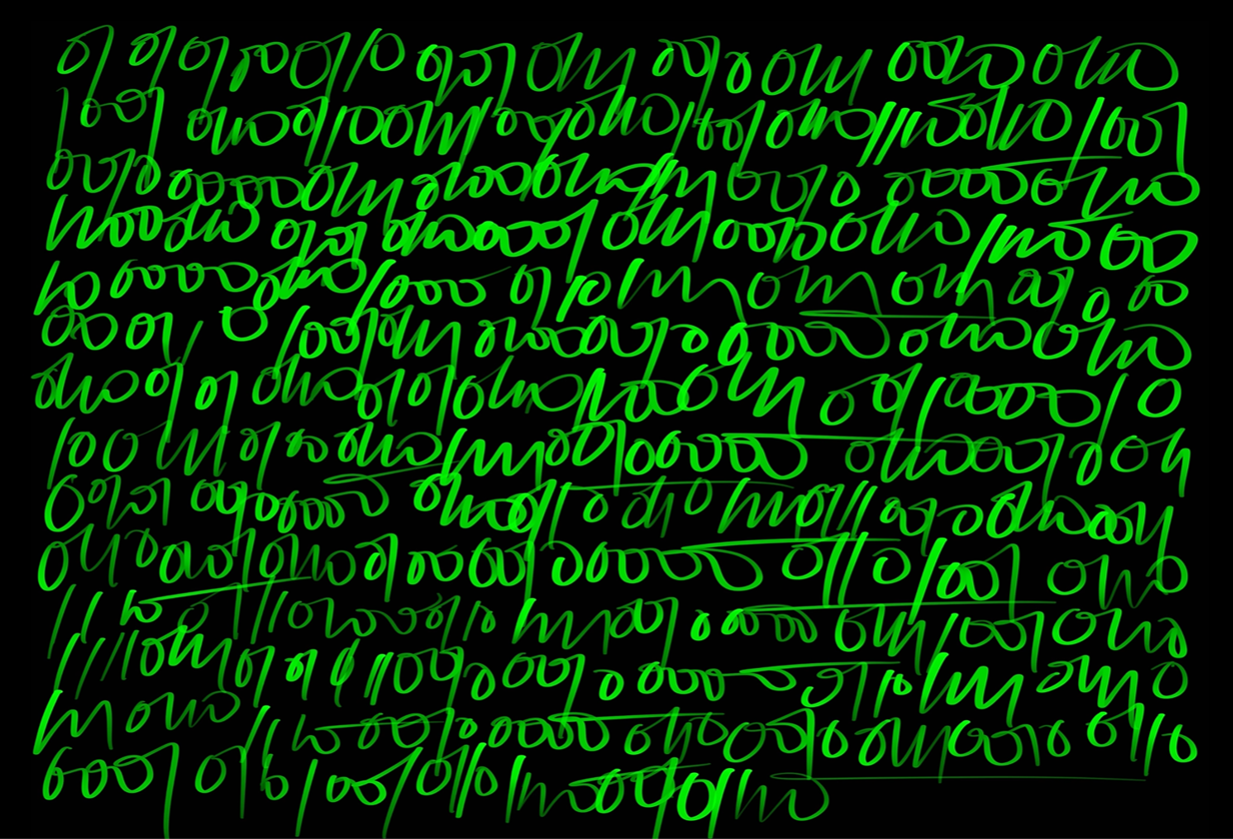
In The World Through AI, an exhibition I saw in Frankfurt in 2026 (also shown in Paris the year before), I was struck by the artists using AI, among them poet Sasha Stiles. She has spent years training a language model on her own writing archive, treating it as a collaborator in what she calls learning to "speak a more-than-human tongue": judgment and imagination extended, not replaced. And pattern recognition in complex systems that used to take weeks can now take an afternoon, freeing people to form their own view instead of being absorbed by it.
The technology that erodes judgment when left undesigned is the same technology that sharpens it when someone decides, on purpose, that it should.
Four questions worth asking your leadership team
1. Is our AI built to hand over answers, or to ask the question that makes someone think harder first?
2. Do we know how often AI output gets used without anyone checking it, and have we built in a reason to check?
3. Have we actually taught people the skill of verifying AI output, or did we assume they'd pick it up on their own?
4. When AI makes a recommendation, does anyone still have to put their name next to the decision, the way a human always did?
If those are harder to answer than you'd like, you're not alone. It's exactly the territory I built into a hands-on workshop for executives steering their organizations through this transition. Reach out if it would help your team.
What this means on Monday morning
I'm not going to tell my kids, or myself, to stop using AI. That ship has sailed, and I don't think it should turn around. What I try to practice myself, and what I'd tell any leadership team, is to keep exercising the muscle that matters: pause, question, check, decide. Not because the tool can't be trusted, but because thinking for yourself was always something to keep exercising, long before AI made the alternative so convenient.
AI doesn't erode our capacity to think for ourselves. Unexamined trust does. The crane will lift whatever we load into it: the only real question is whether anyone is still checking the load.
What do you think?
Sources
• Danry, Pataranutaporn, Mao & Maes, “Don’t Just Tell Me, Ask Me” (CHI 2023)
• Korn Ferry, “Workforce 2026” report (2026)
• Bedard, Kropp, Hsu et al., BCG/UC Riverside, “When Using AI Leads to Brain Fry” (March 2026)
• BCG, “When Everyone Uses AI, Companies Risk Losing Critical Skills” (June 2026)
• HBS Working Knowledge, “AI Persuasion Bombing Can Make Experts Question Themselves” (2026)
• Demirer, Musolff & Yang, “Writing Code vs. Shipping Code” (NBER Working Paper 35275, 2026)
• Catalini, Hui & Wu, “Some Simple Economics of AGI” (arXiv:2602.20946, Feb 2026)
• Sasha Stiles / ITU AI for Good (May 2025)