Dare to Un-Lead: What is Un-Leading?
Un-leading means letting go of the idea that leadership lives in one person at the top.
In Dare to Un-Lead, Céline Schillinger argues that leadership is a collective capacity: it emerges from a diverse, well-connected group of people who choose to act together.
The book builds on three principles from the French republican motto.
Liberty is agency: people think for themselves, speak up and act.
Equality is the network: information and ideas flow across silos and levels, whatever people’s rank.
Fraternity is community: people who want to work together because they share a purpose.
Céline first developed this approach at Sanofi, where an email she shared with a few colleagues about changing the culture grew into an employee movement, and where volunteer networks later mobilized thousands of colleagues to improve quality and performance. Since 2018, she has helped dozens of companies mobilize their people and accelerate their collective performance through “un-leadership”.
Why does it matter even more with AI?
As AI takes on more of the work, what stays distinctly human (judgment, connection, commitment) is exactly what relational leadership is designed to grow.
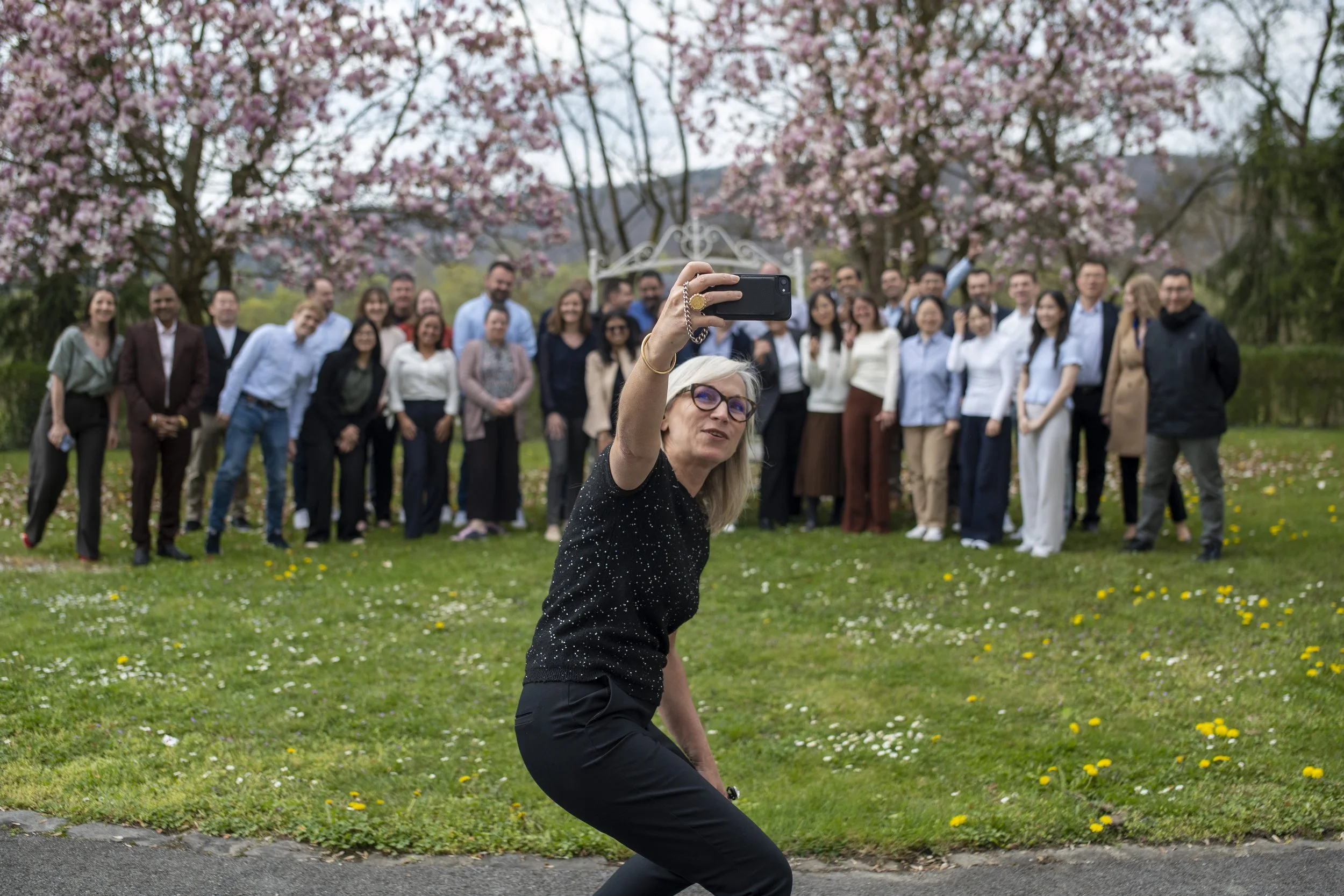
Celine at work - With a phenomenal group of volunteers
Does un-leading mean having no leaders?
No. Un-leading means leadership no longer rests on one person at the top; it is shared across a well-connected group. Formal leaders still matter, but their role changes: from directing people to creating the conditions in which people choose to act together.
What does a leader actually do when they un-lead?
They create three conditions. Agency, so people think for themselves and act on what they see. Networks, so information and ideas flow across silos and levels. Community, so people want to work together around a shared purpose. The leader becomes a convener: less central to every decision, and more essential to the whole.
How is this different from classic change management?
Classic change management pushes a plan from the top and manages resistance. Un-leading works like a social movement: change spreads because people share its purpose and invite others in. Movements mobilize people more widely and sustainably than any mandated program.
Does un-leading work in large, regulated organizations?
Yes. Céline first developed it at Sanofi, in the strictly regulated vaccine industry, where volunteer networks mobilized thousands of colleagues to improve quality and performance. Since 2018, organizations in aviation, industry, pharma and finance have used the approach to mobilize their people.